Protecting Historical Medical Collections
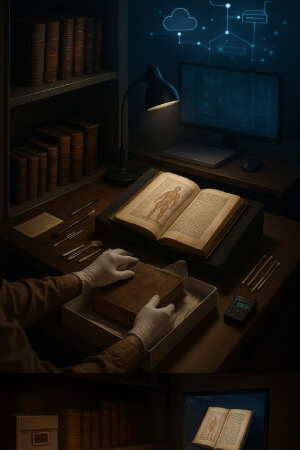
Historical medical documents exist in two forms - physical records and digital collections. Why is this? The physical records are the original works of literature that early researchers and physicians published, and they include books, pamphlets, and images. Given how fragile and rare these collections are, libraries and institutions offer limited access to them. The digital collections, on the other hand, are digital copies of these physical records, which are accessible online, often through open-access platforms hosted by libraries, archives, and other institutions. Some of these collections feature transcriptions and may be later print versions of the original records. Even so, they often convey the same information that you would find in the original records, but with the added perks of being accessible around the clock. So, while your local library may not allow you to peruse an older historical book, they likely have a digital version that you are free to read.
Now, how do libraries and other institutions keep these medical records safe?
Physical Collections
Manuscripts, artworks, and other physical works of literature are very fragile and are subject to wear and tear over time. So, when your library offers limited access to such collections, it's not because they do not want readers to benefit from this information. It is because these books are so delicate that the more people turn the pages on them or check them out, the more deterioration they suffer. Worse still, mass publishing was not available in the past, so a rare book may be the only one of its kind throughout the earth. Priceless.
With such high stakes, libraries often employ the following strategies:
Controlling the Environment
Books do not just wear out from use. They can also undergo deterioration from exposure to the elements. Think about it. Have you ever gone to a yard sale or up someone's attic and taken a look at the state of older books? Unless they have been kept in optimal conditions, these books are often falling apart, and even if they have not been read, they can look worn out. Libraries prevent this from happening through the following:
- They regulate the temperatures and humidity. Books kept in storage areas where temperature and humidity levels fluctuate are prone to expanding and contracting. Over time, these constant changes result in warping, cracking, and overall increased fragility. Libraries prevent this by setting optimal temperature and humidity ranges such that, come winter or summer, the physical environment remains stable.
- They take advantage of the darkness. If you have ever visited someone with an old book collection, you may have noticed that they kept their books in a dark room. It's not by chance. Light, whether visible or ultraviolet, causes wear and tear in books. The writing slowly fades, and the overall book structure feels brittle. That is why most libraries keep their historical collections in dark rooms or enclosed spaces. And when they are showing the books, they do so under low-light conditions, often filtering out ultraviolet light.
- They keep the pollutants out. Besides light, humidity, and extreme temperatures, books also fall apart when exposed to airborne pollutants. The degradation is especially worse when the books are exposed to gases, as these chemicals can break down the books. Libraries stay on top of this by using air filtration systems. Many libraries will even house their books in acid-free boxes lined with tissue paper just to make sure they do not touch anything that could damage them.
- They prevent pest infestations. Imagine going through the trouble of creating optimal conditions only for a rat to eat your book collection. It is a very real risk. And it's not just rodents who can eat books. Insects can also destroy a whole collection in days. Luckily, pest management strategies such as regular monitoring and keeping the storage area clean are effective in preventing this.
- They plan for disasters. Even the safest storage areas can be affected by natural events like fires and floods. At the same time, there are people who may try to break in and steal the rare collections. That is why libraries and other institutions have security and disaster response plans in place.
If you also have a collection at home and would like to pass it on to other people, these are some measures that you, too, can implement.
Safe Handling
Keeping the books in storage is a great way to protect them. But let's be honest. At some point, the libraries have to allow people to touch the books, be it during scanning, reading, research, or other activities. So, how do they ensure that this does not pose a risk of damage? First, they limit the number of times that people handle the books. Often, you will have to provide a good reason as to why you must access these historical collections, e.g., you are doing research on a specific disease. And secondly, where such handling is necessary, libraries ensure that their staff follow the appropriate techniques to avoid damaging the books. Only staff who have undergone training on handling rare collections get to handle the books, which reduces the chance of damage.
Digital Collections
In this digital age, more libraries and institutions have digitized their rare collections and are providing them to readers on their online platforms. Not only does this help them safeguard the originals for posterity, but it also allows them to share historical information with billions of people across the globe. All that readers have to do is log onto the digital platform, find the book they want to read, and download it or read it online. But while digital collections are much easier to manage, they also carry some risks, such as obsolescence. Here is how libraries are managing this:
- Mitigating data loss. If you have ever had your hardware get corrupted or fail, you know just how hard it can be to recover data from it. For many people, such instances translate into massive data losses. And if this were to happen to a library that had digitized a collection, this would set it back, especially if the original record was no longer in a good physical state to allow re-scanning. As such, many libraries take measures against potential data losses by creating multiple copies of the same file. They upload some of these copies online with different media formats and keep at least one copy of each record off-site. This way, if something were to corrupt the data, they can easily re-upload the book.
- Keeping up with technological changes. Remember when compact discs were the order of the day in data storage? Storage media keep changing, such that a hard drive that was ideal yesterday can be old news by tomorrow. Libraries must keep moving their data from old medium versions to newer ones to ensure that once the old mediums degrade, their data stays safe. But it's not just the storage that changes - the file formats do, too. So, the libraries are constantly reviewing the more open-source formats and converting their current documents into these formats to ensure that they do not become obsolete.
- Auditing the files. The preservation work does not stop at creating the files and uploading them. Libraries must conduct regular audits of their files to make sure that they have not been changed or corrupted.
In addition to these measures, libraries also create metadata and unique identifiers for their digital collections, thus ensuring that even if the book's location changes, readers can still find it using these details.
Addressing Privacy and Ethics Concerns
The preservation efforts geared at making medical literature more accessible come with many advantages, not just for researchers but for the general public as a whole. But they raise some concerns, more so when it comes to digitization. Let's take a look at how libraries and other organizations navigate this:
- Privacy concerns.
Collections come in many forms, and some of these feature personal papers and institutional records. And while the context is of a medical nature, such records reveal people's names, medical histories, financial data, and many other details that do not comply with the data protection laws. As such, institutions that wish to provide such records must proceed with caution. To start with, where the people referenced in the records are living, the institutions must obtain informed consent from these individuals. Additionally, they must either redact or anonymize personal details that could reveal a person's true identity.
- Ethical concerns.
Medical literature may include information that is considered sacred to some specific communities, especially indigenous groups. As such, it is important for the organizations to assess whether the information may infringe on other people's cultures and whether providing this information would be a disservice to the referenced groups. The easiest way for them to do this is to consult leaders in such communities who can offer a balanced perspective as to the pros and cons of sharing such materials. In many cases, libraries work hand-in-hand with the communities to determine what they should keep and what kind of access controls they should have in place.
Beyond cultural sensitivity, libraries and other institutions are tasked with ensuring that the digitized records in their collections are a true reflection of the original records. While they have the leeway to reformat the materials, they should not alter the original data. For this reason, libraries must have a clear chain of custody that details how the preservation process took place, from the scanning to the text generation down to the creation of the metadata, which aids in verifying the authenticity of the digital copies.
And finally, there is the issue of intellectual property rights. While libraries, archives, and institutions are providing valuable information to the public, their mission should not infringe on the rights of creators. Of course, understanding intellectual property rights in the face of historical literature can be complex. However, they are required by law to only engage in sharing information to which they have rights of distribution.
“Let food be thy medicine and medicine be thy food.” – Hippocrates
— AncestralHealth☀️ (@AncestralHealtx) November 27, 2025
We took this wisdom, ignored it, and replaced real food with seed oils, sugary junk and pills for every symptom. Your grandparents understood this better than most doctors today: fix your food, and half your… pic.twitter.com/mcGdcHFTRi