The Evolution of Medicine
Truth be told, medicine is still evolving, and we are sure to come across many more discoveries in the future. After all, just a few years ago, who knew that GLP1 drugs would be the new way to combat obesity? Who knew that epigenetics would soon be the topic of the day? Medicine is the gift that keeps on giving. But where did it all start?
Early Medicine Traditions
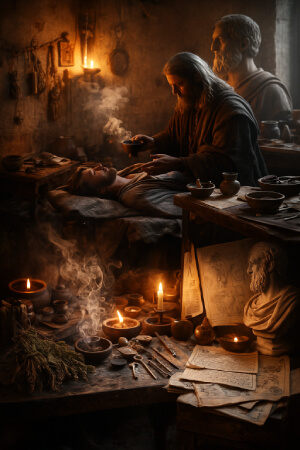
If you go to a hospital today with a fever, doctors will be hard at work running tests to figure out what is causing the high temperature. The goal here is to figure out if you have an infection or underlying condition - it is all physiological. But back in the ancient days, physiology was not the first thing that came to people's minds. In fact, at the time, the healers doubled as spiritual authorities, and they approached diseases in two ways.
If the disease was obvious and there were known ways of treating it, they approached it practically, such as with herbal ointments for wounds and basic surgeries for broken limbs. But when the cause of the ailment was not obvious, they turned to the second option - the rituals. For a long time, people thought that unexplainable illnesses were the result of demons or angering the gods. So, healers would embark on rituals geared at appeasing the spirit world.
These ritualistic practices were the mainstays in ancient civilizations, such as Egypt and China, for a long time. However, come the 5th Century BC, Hippocrates had a different idea, which paved the way for the Hippocratic School in Greece. So, what was it? Rather than seeing diseases as being due to disturbances from the spirit world, this school of thought held that diseases were a result of an imbalance in the body, specifically in the blood, phlegm, yellow bile, and black bile. As such, healers adopted a systematic approach where they observed people's bodies in order to determine the imbalance before offering a prognosis. Having come up with this objective approach, it was not long before the healers determined the ethical standards that they would adhere to when treating the ill. And if you have ever heard of the Hippocratic Oath, it stems from this period in time!
Later on, other healers, such as Galen, built on this approach, giving way to several theories about how the human body worked. Galen, who was a prominent healer in the 2nd Century BC, went as far as dissecting animals and humans for a more in-depth observation. But since dissection was not widely supported, his practical studies did not yield much fruit. However, his theories on the human anatomy became invaluable to both Western and Islamic medicine for many centuries to come.
The Rise of Hospitals
Do you remember when we hinted that hospitals did not exist in previous centuries? That's because they did not. So, where did all the sick people get help? Back in the early centuries, the sick either stayed with their loved ones at home or were housed in guesthouses which had been designed to provide shelter to the vulnerable in society, such as the poor and the elderly. These guesthouses, which were a form of charity within the communities, went by different names across regions, including monasteries in Europe. But no matter what people called them, these buildings were seen as places where the sick could go and seek comfort. Not much healing took place in these houses as the causes of disease were often unknown.
This housing of the sick continued for centuries and did not start changing until the 18th and 19th centuries. At the time, old charitable guesthouses were falling apart, and more sick people were being pushed into what had now become urban hospitals, where healers (physicians) would offer comfort and treatment. As more sick people flocked to these hospitals, physicians realized that they could use these opportunities as teachable moments. So, on one hand, they were taking note of patient symptoms, and on the other hand, they were performing autopsies to look for anatomical changes. Soon enough, they started seeing patterns between some symptoms and anatomical changes. The hospitals thus slowly turned into centers where physicians could embark on education and come up with cures for different diseases.
Human observations, coupled with pathological studies, continued, leading into the 19th and 20th centuries, where germ theory and aseptic surgery came into play. With physicians adopting these and more practical ways to care for the sick, hospitals, which had once been basic houses of comfort for the sick, transformed into high-level care facilities with diagnosis (labs and imaging) and curative (surgeries and drugs) approaches.
The Evolution of Modern Medicine
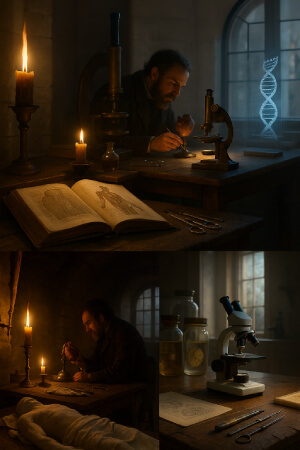
Physicians who practiced Hippocratic and Galenic medicine viewed health as a state of balance, such that if someone was sick, something was out of balance. But how could physicians tell what was amiss? Since human dissection was limited and frowned upon for the most part, they relied on external observations. They would check people's pulses, analyze their urine, and so on. While this helped physicians come up with systematic ways of viewing the human body and coming up with diagnoses, this approach was quite limited.
Then, around the 16th century, came physicians such as Andreas Vesalius, who did what had to be done for medicine to advance - they started dissecting human bodies. With this inward look, they were able to view human bodies as machines with specific mechanisms. Not only did they delve into the anatomy of the human body, but they also studied its functions. Thanks to this, physicians were able to tell how each part of the body related to the other. Take blood circulation as an example - this was a discovery in the 17th century. Before that, physicians had only been guessing when it came to blood flow in our bodies!
Physicians, intrigued by these new discoveries, kept poking and prodding. And with hospitals emerging as ideal medical schools, they had a lot of data available to them. Banking on dissections and various findings, they discovered the cell theory in the 19th century. Finally, they had been able to break down the body, not just into its organs, but also down to the cellular and sub-cellular level. And as such, they were able to understand diseases better, which helped them come up with more effective treatments. But they were far from done.
Come the 20th century, physicians stumbled upon genetics and molecular biology, which helped them narrow down treatment options based on people's specific needs. Now, with things like gene therapy and personalized medicine, physicians are able to target diseases at their points of origin rather than employing a broad intervention. For example, if you have an MTHFR gene mutation, you no longer have to suffer from low energy. Instead, you can take methylated folate to account for your body's inability to process folic acid. But had you had this mutation centuries ago, such insights would not have been available!
The Development of the Medical Profession
Walk into a hospital now, and you will come across different medical professionals who wear different hats. From surgeons to doctors to nurses, we have many people working in the medical field, all of whom are tasked with a specific role. But was it always like this? Like medicine, the medical profession evolved with time.
We have already covered that in the ancient days, healers banked on practical and religious practices to heal people. In these times, such knowledge was passed down from one generation to another through apprenticeship. But as people became more conversant with how medicine worked, physicians took on distinct roles, and there was often infighting between the factions. We had the physicians (theorists) who attended school to learn how to diagnose patients. These were often seen as the most qualified and would step in during observations and give directions as to how to treat the patient. Then, we had the practical surgeons who would perform the surgeries. While surgeons today rack up a lot in earnings and earn a lot of respect, that was not the case in the beginning. If anything, they were seen as the manual labor in the hospital and had a lower status. After that, we had the pharmacists who handled the drugs. And, of course, there were the home healers who employed different herbal strategies.
For a long time, there was no professionalization in medicine, and early attempts to do so were futile. But the transformation of hospitals in the 18th and 19th centuries played a big role in changing the medical landscape. With physicals converging in these facilities, it became quite easy to offer supervised training, not just in diagnosis but also in surgical treatments. As a result, the physician and surgeon roles were combined, thus requiring physicians to couple their theoretical experience with practice. Over time, the medical body of knowledge expanded to include more theories. It then became clear that if a physician was to be truly good at their job, they had to undergo intensive training under supervision, where they could master the ins and outs of human physiology. Thanks to this, medical professionals gained the monopoly on scientific healing.
Into the 20th century, it became clear that there was a need to establish medical schools in universities, thus promoting more scientific research and providing facilities where more people could undergo medical training. And not before long, it became mandatory for all practicing physicians to complete their training and get licensed before they could practice medicine. At the same time, more medical professions became available - ranging from nurses to imaging specialists, down to psychologists. It also became possible for doctors to specialize in their core areas of practice, which birthed specialities like endocrinology.
It's safe to say that the medicine industry has come a long way, and there are more discoveries lying in wait. But for now, we can appreciate just how powerful this field has become in not only diagnosing but also treating countless ailments.
“Let food be thy medicine and medicine be thy food.” – Hippocrates
— AncestralHealth☀️ (@AncestralHealtx) November 27, 2025
We took this wisdom, ignored it, and replaced real food with seed oils, sugary junk and pills for every symptom. Your grandparents understood this better than most doctors today: fix your food, and half your… pic.twitter.com/mcGdcHFTRi